Extension cord voltage drop calculator
How many volts a cord loses at a given length and current, and the thinnest gauge that keeps the drop under 3%.
How it works
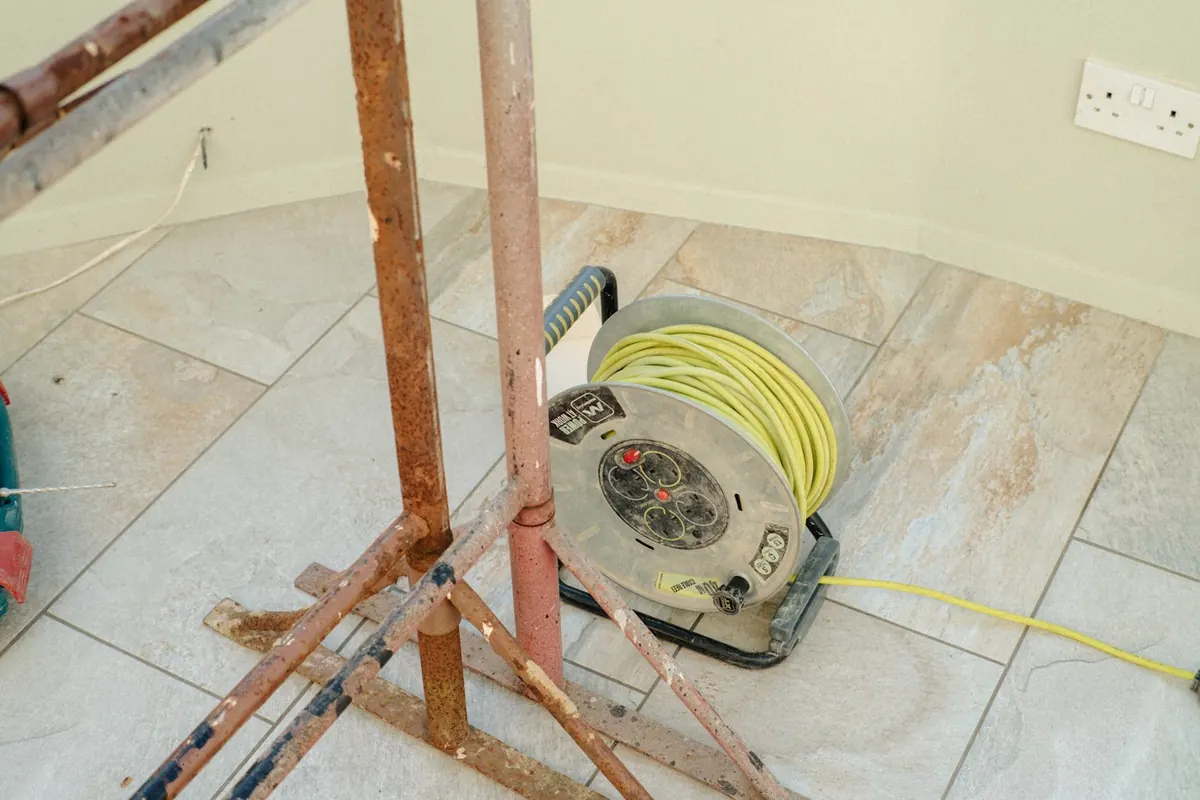
Voltage drop = 2 × length × current × resistance per foot. The factor 2 covers the out-and-back conductors. The resistance figures are for uncoated copper from NEC Chapter 9, Table 8: 16 AWG 4.016 Ω, 14 AWG 2.525 Ω, 12 AWG 1.588 Ω and 10 AWG 0.9989 Ω per 1,000 ft. A large drop makes motors run hot and slow, and an overloaded cord can overheat.
Quick reference
| 16 AWG | 13 A | 25–50 ft light loads |
| 14 AWG | 15 A | Up to 50 ft for most tools |
| 12 AWG | 20 A | 50–100 ft, saws and compressors |
| 10 AWG | 30 A | 100 ft+ and heavy motors |
Ampacity is a guide only. Always use the cord rating printed on the jacket and never exceed it.
Questions
Where do I find the amps?
On the tool’s nameplate. If it shows watts, divide by the voltage.
Is 5% acceptable?
Many electricians aim for 3% on a branch and 5% overall. Motors start more easily with less drop.
Sources
Injury data for these tools
 Other power saws (miter, tile, unspecified)Laceration33,665
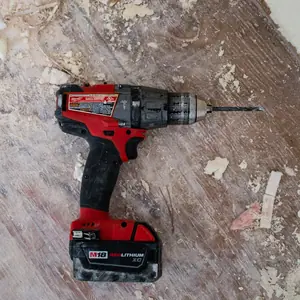 Power drillsLaceration24,129
 Welding equipmentRadiation burn14,509
 Circular sawsLaceration10,961
 Extension cordsFracture5,056
 Other power toolsLaceration3,409
ER visits in 2025
More calculators
Noise exposure calculatorHow much of your safe daily noise dose a tool session uses.Two-stroke fuel mix calculatorOil to add for 50:1, 40:1, 32:1 or 25:1.Ladder angle & size calculatorBase distance by the 4:1 rule, ladder length and duty rating.Generator wattage calculatorRunning plus starting watts for the things you want to power.Tool battery runtime calculatorWatt-hours and minutes of run time from V and Ah.Board feet calculatorBoard feet and lumber cost for any number of boards.